
Danang court sentences imprisoned activist to an extra 11 years in prison for protesting Communist Party
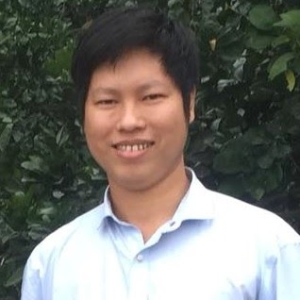
Trinh Ba Phuong
On September 27, 2025, the Da Nang City People’s Court convicted Trinh Ba Phuong, a prominent land rights activist, for “spreading propaganda against the state” (Article 117 of the criminal code) and sentenced him to 11 years in prison. Phuong was convicted while already serving a 10-year prison sentence for the same crime and now must serve a total of 21 years in prison, an unusually severe punishment.
The new conviction centers on a statement that Phuong wrote condemning the harsh punishment of former political prisoner Phan Cong Hai, as well as a banner he made that reads “Down with the Communist Party of Vietnam for violating human rights”.
Phuong’s prosecution for his speech while already incarcerated is a troubling development that could set a dangerous precedent for the government to target other political prisoners who, like him, exercise their right to freedom of expression while imprisoned. As discussed below, the new charges against Phuong are also illustrative of Vietnam’s pattern of prosecuting dissidents using vaguely-worded laws with broad application in order to silence them.
A family legacy of resistance
Phuong comes from a family with deep roots in Vietnam’s land rights struggles. His parents, Trinh Ba Khiem and Can Thi Theu, were among the Hanoi farmers who protested in 2008 against unfair government land seizures. Both were convicted in 2014 for “resisting persons on duty” and sentenced to 15 months in prison. His mother, Can Thi Theu, was sentenced to 20 additional months in prison in 2016 for “disturbing public order” during a protest.
Phuong advocated for his parents’ release and emerged as a vocal advocate against government land grabs. He gained significant attention as the co-author of the Dong Tam Report, which documented abuses during the deadly January 2020 police raid in Dong Tam commune. The raid, in which an 84-year-old farmer and three police officers were killed in a bid to dispossess the farmers of their land, drew international scrutiny of the tactics employed by the police.
In June 2020, Phuong, his mother Theu, and his brother, Trinh Ba Tu, were arrested and charged for “spreading propaganda against the state”. Phuong was arrested mere days after his wife had given birth to their second child. In December 2021, Phuong was sentenced to 10 years in prison and five years of probation. Theu and Tu were also convicted in 2021 for “spreading propaganda against the state” and remain incarcerated.
‘I’ve committed no crimes against the Vietnamese people. It’s the Communist Party that has sold out our land, betrayed our nation and harmed our citizens. History, ultimately, will judge the Communist Party for the crimes it has committed against the people of Vietnam.’
-Trinh Ba Phuong at his August 2022 appeal trial, as reported by his sister, Trinh Thi Thao
Phuong’s conviction was upheld on appeal in August 2022. International human rights groups denounced the trial as a ‘travesty of justice’, citing torture during pretrial detention, including beatings that caused kidney swelling and genital injuries. Prison officials only permitted Phuong to see his family in August 2022—26 months after his arrest. Despite these challenges, Phuong has remained resolute behind bars, often standing up for his rights and those of other prisoners. In November 2024, he staged a 20-day hunger strike to protest prison guards confiscating prisoners’ writing and reading materials.
New charges
The new charges against Phuong, detailed in Indictment No. 31/CT-VKS-P1 (August 7, 2025), target acts Phuong allegedly committed in prison. The indictment accuses him of ‘consistently having displayed a defiant and resentful attitude toward the communist regime’ and writing a statement and a banner expressing his opposition to the Communist Party of Vietnam (CPV) (p.1).
Key events detailed in the indictment include:
- September 9, 2023: Phuong and fellow inmates Phan Cong Hai and Truong Van Dung shouted slogans such as ‘Down with the Communist Party of Vietnam for violating human rights’ (p.1).
- November 18, 2024: Prison officers found a handwritten A3-sized banner in Phuong’s cell stating: ‘DOWN WITH THE COMMUNIST PARTY OF VIETNAM FOR VIOLATING HUMAN RIGHTS, DOWN WITH THE COMMUNIST COURT FOR WRONGFULLY CONVICTING ME’ (p.1-2).
Phuong refused to make statements during the investigation, exercising his right to remain silent. The Investigation Conclusion Report 14/KLDT-ANDT-D1, dated July 25, 2025, says that there is ‘no evidence to confirm that any agency, organization, or individual directed or funded Phuong’s activities’, underscoring that these were merely individual acts of protest (p.2).
An official opinion from the Quang Nam Department of Information and Communications referenced in the criminal investigation report describes the text on the banner as content that ‘satirizes, criticizes, defames, distorts, and slanders the government’, allegedly causing ‘confusion and anxiety’ and ‘undermining public confidence in Vietnam’s socialist leadership’ (p.2).
In addition to the charges of spreading anti-state propaganda, prosecutors cited an aggravating factor of ‘dangerous recidivism’ under Article 52 of the criminal code (Investigation Conclusion Report, p.3). The indictment and investigation report both state that Phuong’s acts were extremely grave and argue that he must be prosecuted ‘to uphold the rule of law, promote deterrence, public education, and crime prevention, while safeguarding political security and social order’ (p.3).
Fellow inmates Nguyen Xuan Tang, Nguyen Van Thuan, and Pham Van Diep, were summoned as witnesses to the trial, though it is unknown if they were questioned on the stand. As of September 13, 2025, only one of Phuong’s lawyers was granted access to meet him under strict surveillance, raising concerns about the fairness of the proceedings.
In violation of international law
Phuong’s prosecution is, as far as Project88 is aware, the first instance of a Vietnamese political prisoner being prosecuted for their speech while already imprisoned. His actions—which included shouting slogans and writing a banner in his prison cell—would qualify as protected speech under Article 19 of the International Covenant on Civil and Political Rights (ICCPR) according to the guidance provided by the UN Human Rights Committee in General Comment No. 34 (2011), which singles out, as particular forms of protected speech, ‘advocacy of multi-party democracy, democratic tenets and human rights’. As such, from the perspective of international law, Phuong was merely protesting human rights abuses by the Vietnamese government and his alleged wrongful conviction.
Human rights lawyer Dang Dinh Manh, who has represented many human rights activists and who, himself, was forced into exile in 2023 after the Vietnamese government issued a warrant for his arrest, called the government’s case unprecedented and baseless, pointing out that Article 117 of the criminal code, which forms the basis for Phuong’s prosecution, targets opposition to the state, not the CPV. Manh also questioned how Phuong’s limited written output from prison could realistically harm society in the way the charges against him have alleged. In conversations with Project88, Phuong’s wife, Do Thi Thu, emphasized that Phuong’s writings are not being disseminated outside of prison and that authorities appear determined to escalate his punishment.
International organizations have also condemned the charges. Human Rights Watch demanded dismissal of the charges, calling the prosecution part of an ‘abusive campaign’ against Phuong’s family. Project88 has documented severe mistreatment in Phuong’s case, including being transferred to a prison 800 km from his hometown; reportedly being subjected to beatings during interrogation; and being subjected to a month-long compulsory confinement in a psychiatric ward and 24/7 cell lockdown.
Several of the acts to which the Vietnamese government has subjected Phuong during his incarceration may meet the definition of torture in Article 1 of the Convention Against Torture and Other Cruel, Inhuman or Degrading Treatment or Punishment (CAT), which was ratified by Vietnam on November 7, 2013. The CAT defines “torture” in Article 1 as ‘[A]ny act by which severe pain or suffering, whether physical or mental, is intentionally inflicted… for purposes such as obtaining information, punishment, intimidation, or coercion‘. Accordingly, by subjecting Phuong to varied and sustained ill-treatment during his incarceration, Vietnam may have contravened Article 2 of the CAT, which provides that the states that are parties to the convention, ‘shall take effective legislative, administrative, judicial or other measures to prevent acts of torture in any territory under its jurisdiction’.
Broader implications
Phuong’s case highlights Vietnam’s tight grip on dissent. Vietnam routinely uses vaguely-worded criminal code provisions like Article 117 to silence activists, journalists, and bloggers. State media rarely covers such cases, and when it does, frames the acts as threats to national security, reflecting a systemic bias against dissent. Vietnam’s conviction of Phuong for acts of expression committed while incarcerated could set a precedent for prosecutions of prisoners who speak out against human rights abuses while imprisoned.
Phuong’s resilience—demonstrated through hunger strikes and his refusal to confess—symbolizes the unyielding spirit of an individual at the forefront of the fight against Vietnam’s human rights violations. His trial and combined 21-year prison sentence serve as a stark reminder of the substantial costs paid by Vietnamese citizens when challenging authority in the country.
Project88, September 29, 2025 (CC BY-NC 4.0)